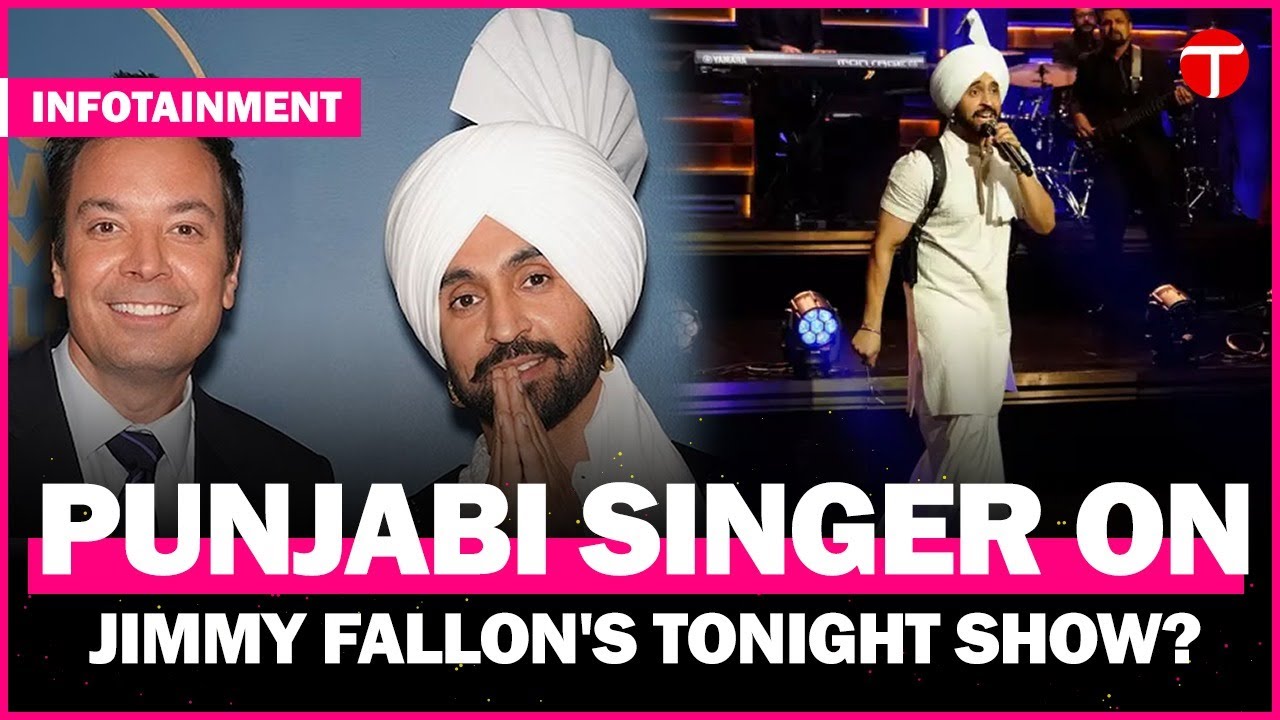
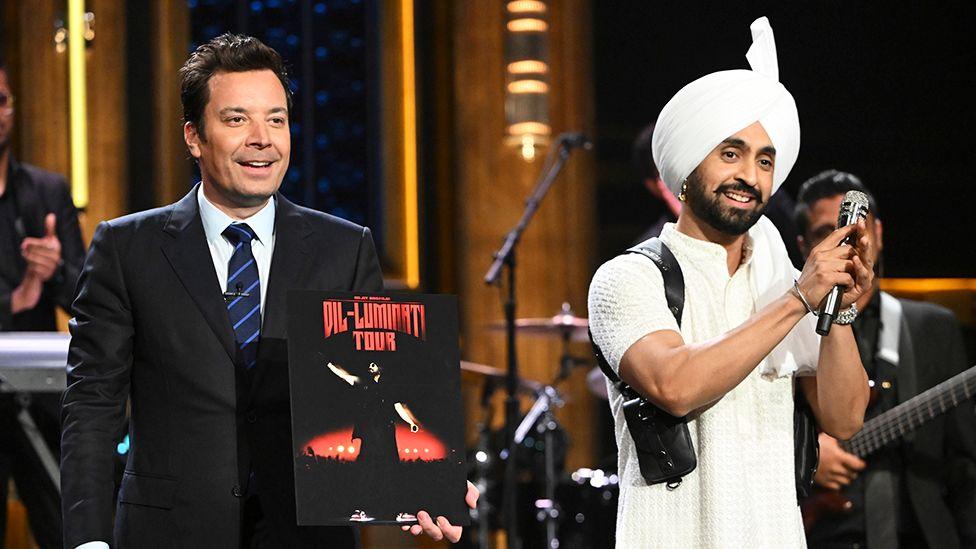
Diljit Dosanjh didn’t just perform on The Tonight Show Starring Jimmy Fallon—he carried an entire culture on his shoulders. When the Punjabi singer-actor took the stage, it wasn’t just another musical guest appearance. It was a quiet but seismic shift in global pop culture—a moment where regional artistry met mainstream American television with authenticity, warmth, and undeniable talent. What followed was more personal: a raw, emotional note from Dosanjh himself, reflecting on the weight and wonder of the night. This wasn’t just a performance. It was a milestone for Indian representation, and the world is finally paying attention.
A Night That Felt Like Destiny
When Diljit Dosanjh stepped into the spotlight on The Tonight Show, the energy was different. Not just because he’s one of India’s biggest stars, but because he brought something rare: unapologetic cultural pride wrapped in effortless charisma.
He performed “Born to Shine,” a track from his 2023 album Moonchild Era, flanked by dancers in vibrant turbans and traditional attire. The fusion of Punjabi beats with modern hip-hop production turned a late-night segment into a cultural celebration. But it wasn’t just the music—it was the way he owned the moment.
From the first note, you could feel the significance. This wasn’t just a crossover attempt. It was a statement: Indian artists don’t need to dilute their identity to belong on global stages. They can wear their heritage like a crown and still command attention.
The Emotional Note That Broke the Internet
Hours after the performance, Dosanjh took to Instagram with a simple caption beneath a photo of his mic stand on the Tonight Show stage.
“This mic… heard my voice in a language that wasn’t English. Heard my turban, my accent, my prayers. And it amplified them. Not because I changed to fit in. But because the world was ready to listen.”
The post resonated because it wasn’t performative. It was vulnerable. It acknowledged the years of being told Punjabi music was “regional,” that his look didn’t “fit” Western molds, that his accent might not travel. And yet, here he was—on one of the most iconic stages in entertainment history—uncompromised.
Fans flooded the comments with pride. First-generation South Asians in the U.S. and U.K. shared stories of growing up embarrassed by their mother tongues, only to now see someone like Diljit being celebrated for speaking, singing, and standing tall in his truth.
It wasn’t just a personal victory. It was communal healing.
Why This Moment Matters Beyond Music
Diljit Dosanjh’s Tonight Show appearance wasn’t the first time an Indian artist performed on American late-night TV. But it might be the first time it felt representational rather than token.
Previous appearances by Bollywood stars or musicians often leaned into exoticism—bright colors, choreographed dance breaks, or attempts to “educate” the audience about “Indian culture” in broad strokes. Dosanjh’s performance skipped the explanation. It didn’t ask for permission. It assumed a shared emotional language.
That shift—from novelty to normalcy—is what makes this moment historic.
Consider this: - He sang primarily in Punjabi. - He didn’t translate every lyric. - He didn’t rely on celebrity cameos or gimmicks.
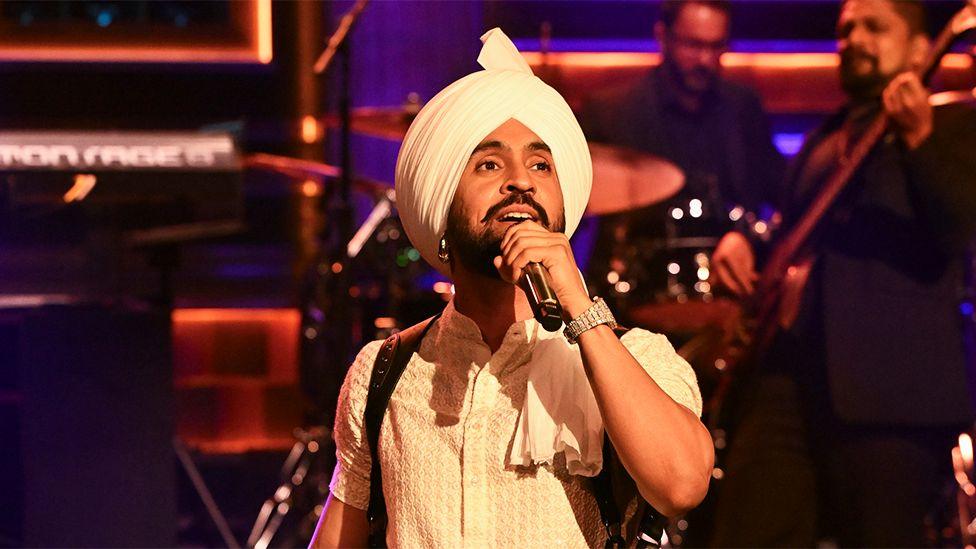
Instead, he trusted the music—and the audience—to meet him halfway. And they did.
The Road to Global Recognition: No Overnight Success
While the Tonight Show moment felt sudden to some, it was built on over two decades of relentless hustle.
Diljit began as a radio jockey in Punjab, then transitioned into music with albums like Smile, The Next Level, and Back 2 Basics. His sound—a blend of bhangra, hip-hop, and soul—resonated locally but slowly began crossing borders, especially in Canada, the U.K., and the U.S., where Punjabi diaspora communities embraced him as a cultural ambassador.
But Dosanjh didn’t stop there. He expanded into acting, starring in Punjabi and Hindi films like Good Newwz and Sardaar Ji, earning critical acclaim and box office success. His crossover appeal grew—not because he chased it, but because he stayed authentic while evolving.
Then came Moonchild Era in 2023, an album that defied categorization. Blending trap beats with spiritual lyrics, English verses with Punjabi poetry, it caught the attention of global tastemakers. Playlists on Apple Music and Spotify began featuring his tracks. International media outlets started profiling him.
The Tonight Show wasn’t a breakthrough. It was a coronation.
Breaking Barriers Without Burning Bridges
One of the most striking aspects of Diljit Dosanjh’s journey is his ability to scale new heights without distancing himself from his roots.
While many artists “rebrand” for global appeal—changing names, dropping native languages, adopting Western aesthetics—Diljit did the opposite.
- He kept his full name: Diljit Dosanjh.
- He wore his turban proudly, even during red carpets.
- He sang in Punjabi, not as a novelty, but as a first language.
- He brought his spiritual beliefs into his music, referencing Sikh teachings and gratitude in interviews.
This consistency built trust. Fans knew he wasn’t performing authenticity—he was living it.
And that’s why his emotional note after the Tonight Show felt so powerful. It wasn’t about fame. It was about belonging.
What This Means for Global Music
Diljit Dosanjh’s Tonight Show debut signals a broader shift in the music industry: the end of the “global pop star” mold.
For years, non-English artists had to conform—translate lyrics, adopt Western producers, or focus on dance-heavy visuals to gain traction. But recent years have shown cracks in that model:
- Bad Bunny sings entirely in Spanish and headlines Coachella.
- BTS conquered the U.S. without releasing an English album first.
- Arijit Singh’s voice soundtracks global Netflix series in Hindi.
Diljit joins this lineage—not by imitating them, but by proving that regional specificity can be universal.
His success opens doors for other artists: - Shubh, the Canadian-Punjabi rapper, now tours arenas. - AP Dhillon blends Punjabi lyrics with drill beats and charts globally. - Female artists like Jonita Gandhi and Jasleen Royal are gaining international visibility.
The message is clear: you don’t have to erase your identity to be seen. You just have to be undeniable.
The Power of Emotional Storytelling in the Digital Age
What made Dosanjh’s post-performance note so effective wasn’t just the words—it was the timing and delivery.
In an era of algorithm-driven content, emotional authenticity cuts through the noise. His Instagram caption wasn’t a PR script. It read like a journal entry—raw, personal, and deeply reflective.
Other artists can learn from this: - Don’t over-polish your narrative. Vulnerability builds connection. - Let your audience in on the journey. Fans don’t just want highlights—they want the weight behind them. - Use platforms to reflect, not just promote. A single heartfelt message can do more than ten viral clips.
Dosanjh didn’t just perform. He shared. And in doing so, he turned a performance into a movement.
What’s Next for Diljit Dosanjh?
The Tonight Show wasn’t a finish line—it was a launchpad.
With Moonchild Era still gaining momentum internationally, Dosanjh is reportedly working on a global tour that blends live music, storytelling, and cultural exchange. There are also whispers of a potential English-language project, not as a pivot, but as an expansion of his artistic range.
But knowing Dosanjh, he won’t rush. He’s never been about chasing trends. He’s about setting a pace that feels right—both artistically and spiritually.
And if his emotional note taught us anything, it’s this: he’s not just making music. He’s making space—for himself, for his language, for his people.
Closing: The Quiet Revolution of Being Unapologetically You
Diljit Dosanjh’s global moment wasn’t loud. It didn’t come with celebrity endorsements or viral challenges. It came with a single microphone, a heartfelt song, and a note from the heart.
In a world that often asks marginalized artists to shrink themselves to fit in, Dosanjh did the opposite. He stood tall—turban, accent, language, and all—and the world leaned in to listen.
His journey reminds us that impact isn’t always measured in streams or awards. Sometimes, it’s in the quiet pride of a fan who finally sees themselves on a stage they never thought possible.
For artists watching from the margins: your voice matters. Your story matters. And you don’t have to change a thing to belong.
FAQ
Did Diljit Dosanjh sing entirely in Punjabi on The Tonight Show? Yes, his performance of “Born to Shine” featured lyrics primarily in Punjabi, with some English verses blended in.
What was the message in Diljit’s emotional Instagram note? He expressed gratitude and disbelief at being accepted on a major American stage without having to alter his identity—highlighting his turban, accent, and language as integral to his success.
Has any other Indian artist performed on The Tonight Show before? While other Indian musicians and actors have appeared, Diljit’s performance stands out for its focus on Punjabi music and cultural authenticity without translation or explanation.
What album is “Born to Shine” from? The song is from Diljit’s 2023 album Moonchild Era, which blends Punjabi folk, hip-hop, and spiritual themes.
How did fans react to his performance? Fans, especially in the Punjabi diaspora, celebrated the moment as a milestone for representation, with many calling it a source of cultural pride.
Is Diljit Dosanjh planning a global tour? Yes, he’s reportedly developing an international tour that will expand on the Moonchild Era concept with live performances and cultural storytelling.
What makes his Tonight Show appearance different from other Bollywood performances on U.S. TV? Unlike past performances that emphasized spectacle or education, Diljit’s set assumed cultural familiarity and focused on music and presence, not explanation.
FAQ
What should you look for in Diljit Dosanjh’s Global Moment: Emotion Meets Stardom? Focus on relevance, practical value, and how well the solution matches real user intent.
Is Diljit Dosanjh’s Global Moment: Emotion Meets Stardom suitable for beginners? That depends on the workflow, but a clear step-by-step approach usually makes it easier to start.
How do you compare options around Diljit Dosanjh’s Global Moment: Emotion Meets Stardom? Compare features, trust signals, limitations, pricing, and ease of implementation.
What mistakes should you avoid? Avoid generic choices, weak validation, and decisions based only on marketing claims.
What is the next best step? Shortlist the most relevant options, validate them quickly, and refine from real-world results.